
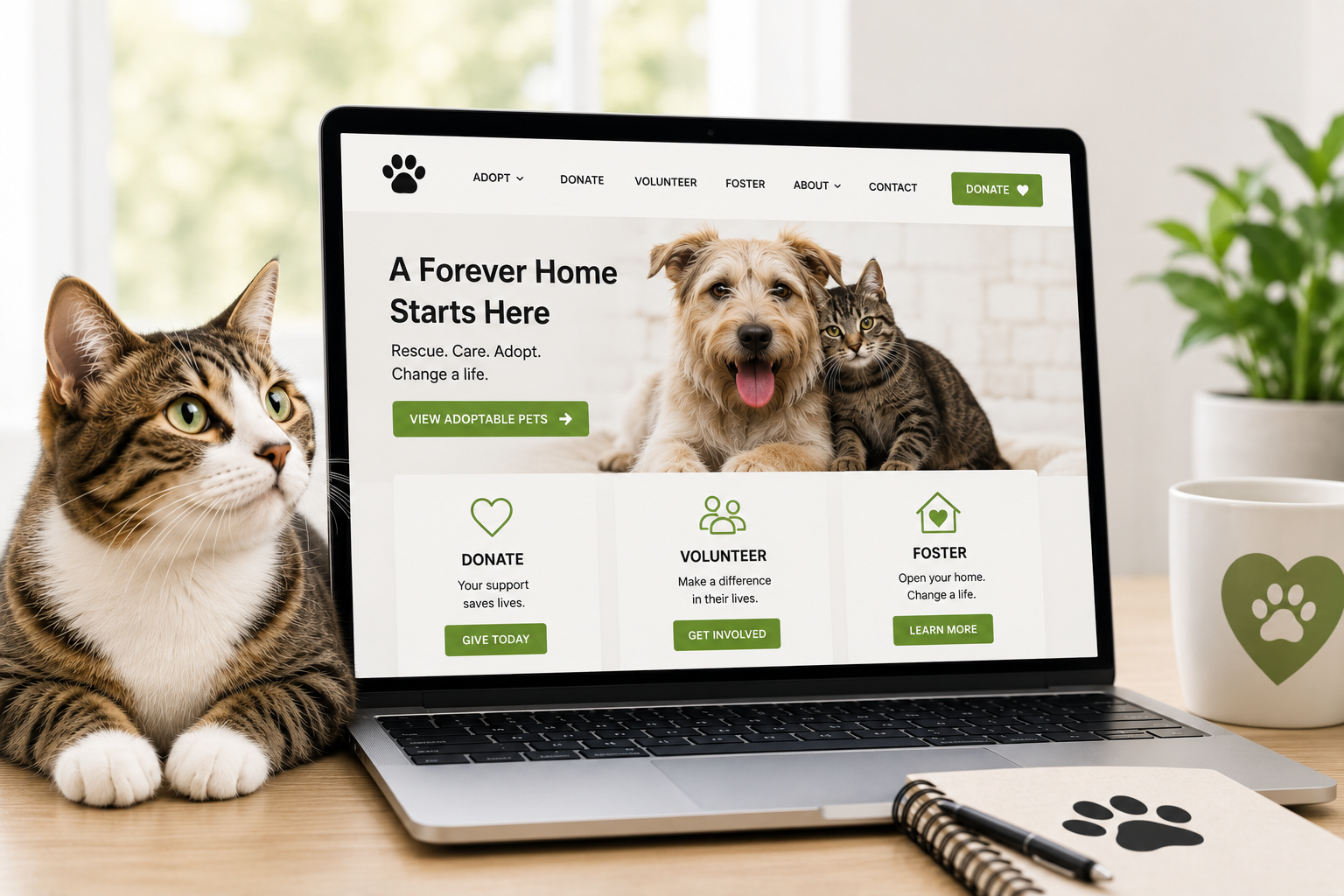
Your animal shelter has invested time and energy into attracting visitors to your website. Maybe you're sharing adoptable pets on social media, ranking well in Google Search, or even using the Google Ad Grant to drive traffic.
But here's an important question:
What happens after someone lands on your website?
If visitors can't quickly find the information they're looking for—or aren't encouraged to take action—you could be losing potential adopters, donors, volunteers, and foster families every single day.
The truth is, even free Google Ads won't deliver meaningful results if your animal shelter website isn't designed to convert visitors into supporters.
Before you invest more time or budget into marketing, use this checklist to make sure your website is ready.
1. Clear Adoption Listings
This is the heart of most shelter websites.
People shouldn't have to search through menus or click multiple pages to find available pets.
Your adoption listings should be:
Easy to browse
Updated regularly
Filterable by species, age, size, or gender (if possible)
Include high-quality photos
Include personality descriptions
Clearly explain the adoption process
The easier you make it to meet your animals, the more likely visitors are to begin an adoption application.
2. Fast-Loading Pages
Website speed matters.
Research consistently shows that visitors leave websites that take too long to load. That means every extra second could cost your shelter an adoption, donation, or volunteer application.
Fast websites also perform better in Google Search.
Simple ways to improve speed include:
Compressing large images
Limiting unnecessary plugins
Using reliable website hosting
Removing outdated content
A faster website creates a better experience for both people and search engines.
3. An Easy-to-Find Donation Page
Someone inspired to give shouldn't have to hunt for your donation button.
Make donating simple by including:
A prominent "Donate" button in your navigation
Secure online payment options
Suggested giving amounts
Monthly giving opportunities
Stories showing the impact of donations
Remember, people often decide to donate in the moment. Don't create unnecessary obstacles.
4. A Dedicated Volunteer Page
Many people want to help before they're ready to adopt.
A volunteer page should answer common questions like:
What volunteer opportunities are available?
What is the time commitment?
Are there age requirements?
How do I apply?
Include an online application whenever possible to reduce friction.
5. A Simple Foster Application
Foster families save lives—especially during kitten season and emergency situations.
Make your foster page easy to understand by explaining:
Who can foster
What supplies are provided
Time commitments
Expectations
Frequently asked questions
Most importantly, include a simple online application that visitors can complete without downloading paperwork.
6. A Mobile-Friendly Design
More than half of website traffic now comes from mobile devices.
That means your animal shelter website should look just as good on a phone as it does on a desktop computer.
Test your site by asking:
Are buttons easy to tap?
Is text readable without zooming?
Do forms work on mobile?
Are images loading properly?
If your website is frustrating on a phone, visitors are likely to leave.
7. Clear Contact Information
People often have questions before adopting, donating, or volunteering.
Make it easy to contact your shelter by displaying:
Phone number
Email address
Physical address
Hours of operation
Social media links
Google Maps location
Don't make visitors search for basic information.
8. Strong Calls to Action
Every important page should answer one simple question:
What should the visitor do next?
Examples include:
Meet Our Cats
View Available Dogs
Apply to Adopt
Become a Foster
Volunteer Today
Donate Now
Contact Our Team
Avoid vague language like "Learn More."
Instead, use action-oriented buttons that encourage the next step.
9. Success Stories
People connect with stories.
Sharing adoption success stories, rescue transformations, and volunteer experiences helps visitors emotionally connect with your mission.
Success stories also build trust.
Consider featuring:
Before-and-after rescues
Happy adoption updates
Foster success stories
Volunteer spotlights
Community partnerships
These stories remind visitors that their support truly makes a difference.
10. Google Analytics & Conversion Tracking
This is one of the most overlooked pieces of a successful website.
Without tracking, it's impossible to know what's actually working.
You should be able to measure actions like:
Adoption applications
Foster applications
Volunteer sign-ups
Online donations
Contact form submissions
Newsletter subscriptions
Conversion tracking helps you understand which marketing efforts lead to real results—not just website visits.
Why This Matters Before Running Google Ads
Many shelters qualify for Google's Ad Grant, which provides up to $10,000 per month in free Google Search advertising.
That's an incredible opportunity.
But here's the catch:
Google Ads bring people to your website—they don't convince people to act.
Imagine running ads that successfully bring hundreds of visitors to your site each month.
If those visitors can't quickly:
Find adoptable pets
Make a donation
Submit a volunteer application
Apply to foster
...then even free advertising won't produce the results you're hoping for.
Your website is where conversions happen.
Think of Your Website as Your Shelter's Front Door
Imagine someone visits your shelter in person.
Would you hide the adoption desk?
Would you make people ask three different volunteers how to donate?
Would you send visitors through five rooms before they could meet an adoptable cat?
Of course not.
Your website should feel just as welcoming, organized, and easy to navigate. Every page should help visitors take the next step toward supporting your mission. Your animal shelter website isn't just an online brochure—it's one of your most valuable fundraising, adoption, and community engagement tools.
Before investing in advertising, take time to ensure your website is ready to convert visitors into action. Small improvements—like faster pages, stronger calls to action, mobile-friendly design, and better conversion tracking—can make a significant difference in the number of adoptions, donations, volunteer applications, and foster sign-ups your shelter receives.
When paired with a strong Google Ads strategy, a well-designed website helps ensure every click has the opportunity to change an animal's life.
Download Our Free Google Ad Grants Guide
Ready to drive more qualified visitors to your shelter's website?
Our free Google Ad Grants Guide explains how eligible nonprofits can receive up to $10,000 per month in free Google Search advertising—and how to use it to increase adoptions, donations, volunteer applications, and foster inquiries.
Download the guide today and learn how to turn more website visitors into lifelong supporters.